

Menu Close

What is Land-Based
Aquaculture?

What is RAS?

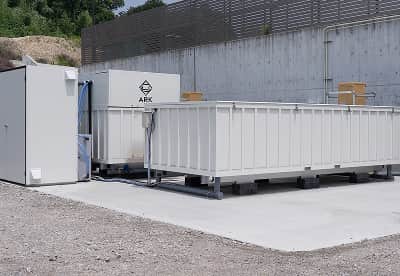
A land-based Recirculating Aquaculture System, or RAS, is an aquaculture method in which fish are raised in tanks on land, while the rearing water is filtered, purified, and recirculated back into the tanks.

In conventional land-based aquaculture, water is often drawn from sources such as groundwater or seawater and then discharged after use. This type of flow-through system tends to depend heavily on water sources, drainage conditions, and site location.

By contrast, RAS circulates and reuses water within the system. This makes it easier to reduce water usage while managing water quality, water temperature, and oxygen levels to create an environment suitable for fish growth on land.

Filtration and Nitrogen Cycling in ARK's Closed-Loop Land-Based Aquaculture

Filtration and Nitrogen Cycling in ARK's Closed-Loop Land-Based Aquaculture

How RAS Differs from Conventional Land-Based Aquaculture

From “Use and Discharge” to “Treat and Recirculate”

Conventional land-based aquaculture often depends on securing a stable water source and managing wastewater discharge.
In RAS, rearing water is filtered, purified, and reused. This helps reduce dependence on external water sources and can also lower the environmental impact associated with wastewater discharge.

From Adapting to Natural Conditions to Controlling the Environment

Fish growth depends on precise water quality management, including water temperature, oxygen, pH, and ammonia levels.
RAS enables these conditions to be managed within the system, helping create a stable environment for fish. Another key feature is that it is less exposed to external environmental changes, making it easier to reduce the risk of pathogens and parasites entering the system.

From Location-Limited Aquaculture to Decentralised Production

Conventional land-based aquaculture can be difficult to start unless the right conditions are in place, such as water sources, land and equipment scale.
Because RAS creates a controlled rearing environment on land, it can expand production possibilities beyond coastal areas or sites near rivers. Bringing production closer to consumption areas can also help reduce transportation distance.

However, RAS is not completed simply by installing equipment. Continuous operational expertise is required, including water quality management, filtration, oxygen supply, and monitoring the health of fish.

Through modular recirculating aquaculture systems, ARK aims to make land-based aquaculture easier to start and easier to deploy in a decentralised way, transforming it into a new form of fisheries infrastructure.

ARK’s Approach to Modular Recirculating Aquaculture

ARK is building a new standard for the fisheries industry through an approach that differs from conventional large-scale land-based aquaculture.

Conventional Model

Large-scale, Capital-intensive Systems

The conventional model, often seen in Europe and North America, involves large-scale, centralised facilities backed by substantial capital investment. These systems are typically designed for mass production of mid-priced seafood species such as Atlantic salmon.

ARK's Approach

Modular, Decentralised Systems

Large-scale aquaculture models typically rely on capital-intensive, centralised facilities designed for high-volume production. ARK takes a modular, decentralised approach focused on high-value species.

Small to Medium Scale

Large-scale plants are not required. With modular tanks, ARK enables high-quality aquaculture at a small to medium scale, adapted to each site environment.

High-value Markets

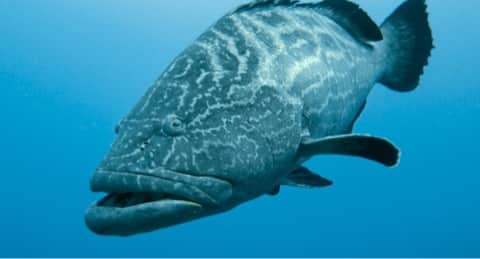
ARK focuses on cultivating rare and diverse species with high market value, including groupers. This allows us to respond directly to demand in premium, high-value seafood markets.

Turning Urban Areas and Resorts into Production Sites

ARK systems can be installed even in locations away from the sea. Urban areas close to consumers, resorts offering premium dining experiences, and many other locations can become new fisheries production sites.

What is Grouper?

the High-Value Fish Well Suited to Land-Based Aquaculture

Taste and Culinary Qualities

Groupers are white-fleshed fish with a clean flavour, firm texture, and a well-balanced level of fat. Their flesh holds together well when cooked, making them suitable for a wide range of dishes, including sashimi, steamed dishes, hot pots, and Chinese cuisine.
Hybrid groupers are also valued for their ability to maintain eating qualities close to those of wild-caught fish while offering more stable quality.

Global Market Potential

In the Middle East, groupers, known as hamour in many markets, are widely recognised and in demand as premium fish for high-end restaurants and hotels.
Large white-fleshed fish with easy-to-handle bones are well suited to steaming, grilling, and Arabic cuisine. With land-based aquaculture, stable supply, standardisation, and Halal-compatible handling can also be supported, making groupers a competitive category in import-dependent markets across the Middle East and Asia.

High Added Value

Groupers command high market prices as premium fish, making them well suited to land-based aquaculture, where fixed costs tend to be high.

Environmental Tolerance

Groupers have relatively strong tolerance to changes in water temperature and water quality, making stable cultivation possible in Recirculating Aquaculture Systems (RAS).

Suitable for High-density Cultivation

Compared with many other species, selected groupers can be managed effectively in tank-based environments, supporting efficient use of tank capacity.

Adaptability to Artificial Feed

Groupers can adapt well to artificial feed, helping stabilise FCR, or feed conversion ratio.

Manageable Disease Control

Compared with marine aquaculture, land-based aquaculture can reduce the risk of external pathogens entering the system, making groupers suitable for planned production.

Performance Optimisation through Hybridisation

Hybrid groupers can be developed to improve traits such as growth speed, disease resistance, and survival rate, supporting higher commercial reproducibility.