


ARK Speaks and Exhibits at “Future Food & Fuel Summit 2026”
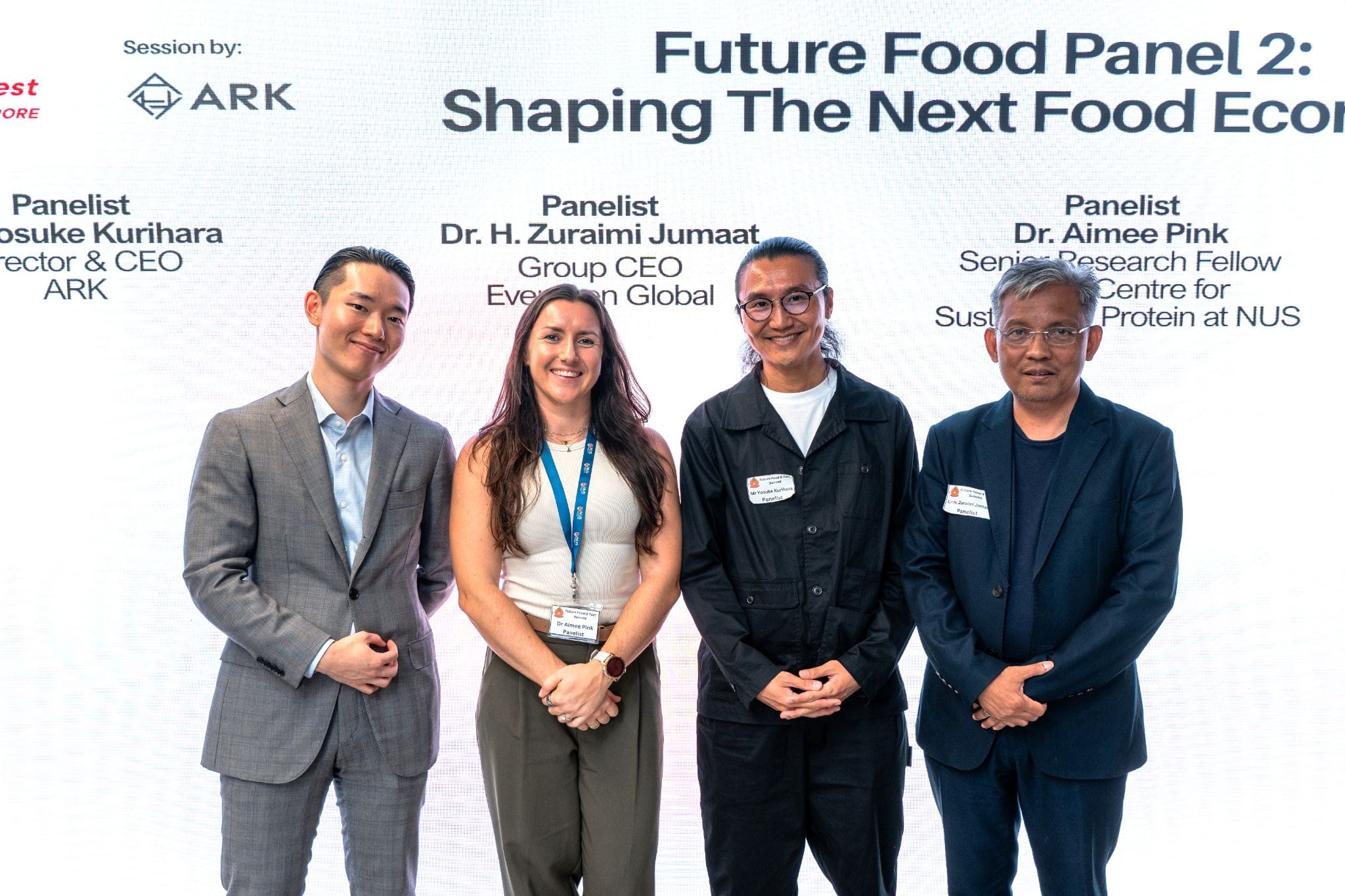
ARK Co., Ltd. (Head office: Hiratsuka, Kanagawa; Co-founder/Director/ CEO: Yosuke Kurihara; hereinafter “ARK”) participated in Future Food & Fuel Summit 2026 (FFFS 2026), an international summit organized by Leave a Nest Singapore and held in Singapore on October 2, 2026.
At the event, CEO Kurihara spoke on the panel discussion “Future Food Panel 2: Shaping the Next Food Economy.” ARK also exhibited at the Technology Showcase, presenting its land-based aquaculture technology and business model.
In this article, we share highlights from the panel and an overview of our exhibit, along with the initiatives ARK is pursuing to realize its vision: “To create the systems and culture that make land-based aquaculture possible for anyone, anywhere.”
About Future Food & Fuel Summit 2026
Future Food & Fuel Summit 2026 was held as part of the commemorative events marking the 60th anniversary of diplomatic relations between Singapore and Japan (SJ60), with support from the Embassy of Japan in Singapore.
The summit aimed to strengthen partnerships between the two countries and translate scientific and technological innovation into tangible business collaborations and social impact.
Singapore and Japan face a shared challenge: how to achieve sustainable growth while making effective use of limited resources, amid increasing demand for food, energy, infrastructure, and sustainable development.
Against this backdrop, the summit brought together innovators, corporations, policymakers, researchers, startups, and ecosystem builders from diverse fields.
Participants exchanged perspectives on how science and technology can help create new value chains and resources, while building more sustainable communities.
ARK is working to address these challenges by developing and promoting modular closed recirculating aquaculture systems (RAS) as a new approach to seafood production.
ARK Joins Panel Discussion “Shaping the Next Food Economy”
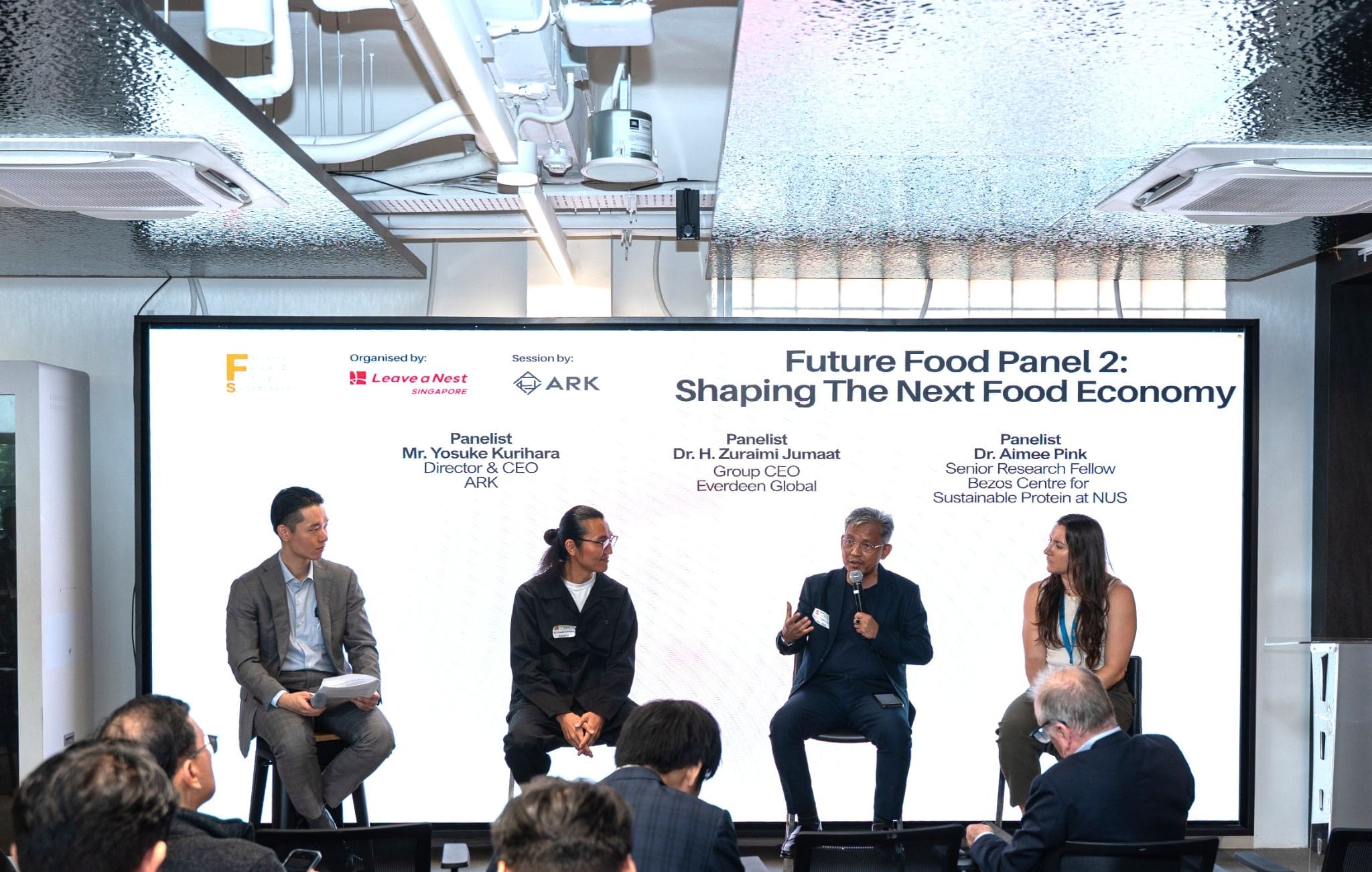
The panel discussion “Shaping the Next Food Economy,” featuring ARK CEO Yosuke Kurihara, explored how next-generation food production technologies can move toward commercialization and achieve widespread adoption as sustainable businesses.
The session examined the future of food supply through three interconnected perspectives: technological development, consumer acceptance, and market access. Discussions covered a broad range of topics, including sustainable food production, halal trade, and commercialization in regional markets.
Panelists also explored the challenges and opportunities involved in bringing food innovations from scientific research and development to consumer-ready products and services, and scaling these innovations across Singapore, Japan, and Southeast Asia.
Alongside Yosuke, the panel featured Dr. H. Zuraimi Jumaat of Everdeen and Dr. Aimee Pink of the Bezos Centre for Sustainable Protein at the National University of Singapore.
Drawing on ARK’s land-based aquaculture business, Yosuke discussed the challenges of transitioning from technology demonstration to commercial-scale production.
He emphasized that technological feasibility alone is not enough to achieve widespread market adoption. Developing a commercially viable business model that takes production costs and profitability into account is equally essential.
From R&D to Real-World Impact
Land-based aquaculture enables planned seafood production under controlled rearing conditions. However, commercialization also presents challenges, including capital investment, energy consumption, and feed costs.
Establishing a viable aquaculture business therefore requires more than developing the technology to raise fish. It is essential to design the entire business model, taking into account initial investment, operating costs, species selection, production volumes, selling prices, and market demand.
To address these challenges, ARK is developing standardized, modular aquaculture systems that allow operators to start at an appropriate scale and expand production capacity as demand and business operations grow.
ARK also takes a systematic approach to commercialization by considering four key elements: Biology, Technology, Business, and Market.
The panel discussion provided an opportunity to highlight the importance of economic viability and market needs in translating technological innovation into commercially sustainable businesses.
ARK Showcases Its Land-Based Aquaculture Technology and Business Model
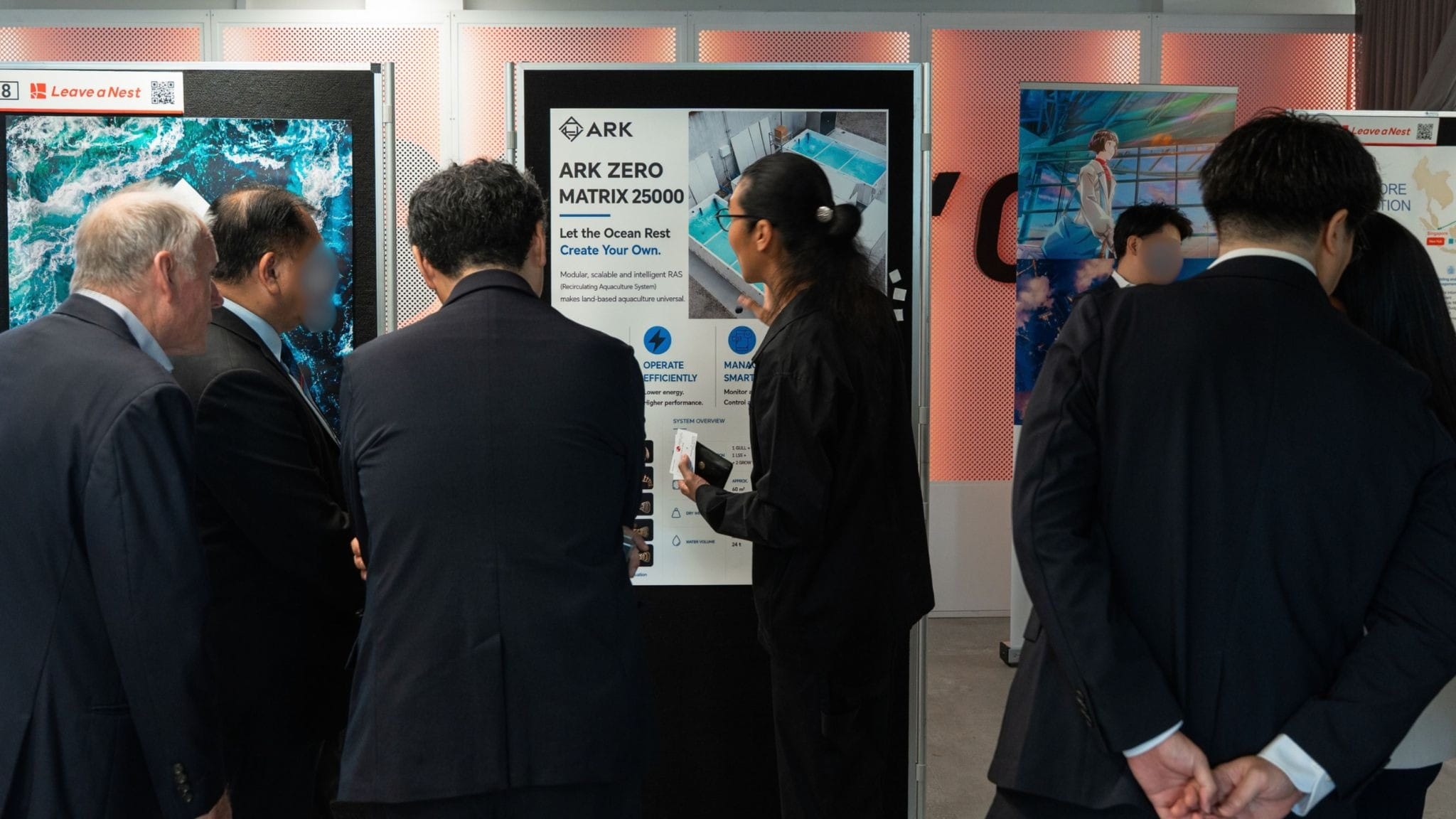
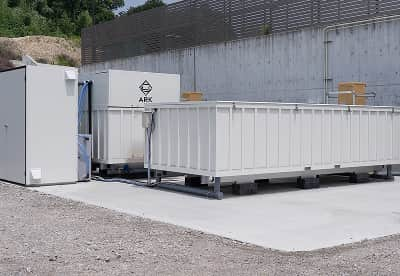
At the Technology Showcase held alongside the summit, ARK introduced its modular recirculating aquaculture system, “ARK ZERO MATRIX,” and “ARK SEA,” its comprehensive support service for establishing and operating land-based aquaculture businesses.
ARK ZERO MATRIX: A System That Scales as Your Business Grows
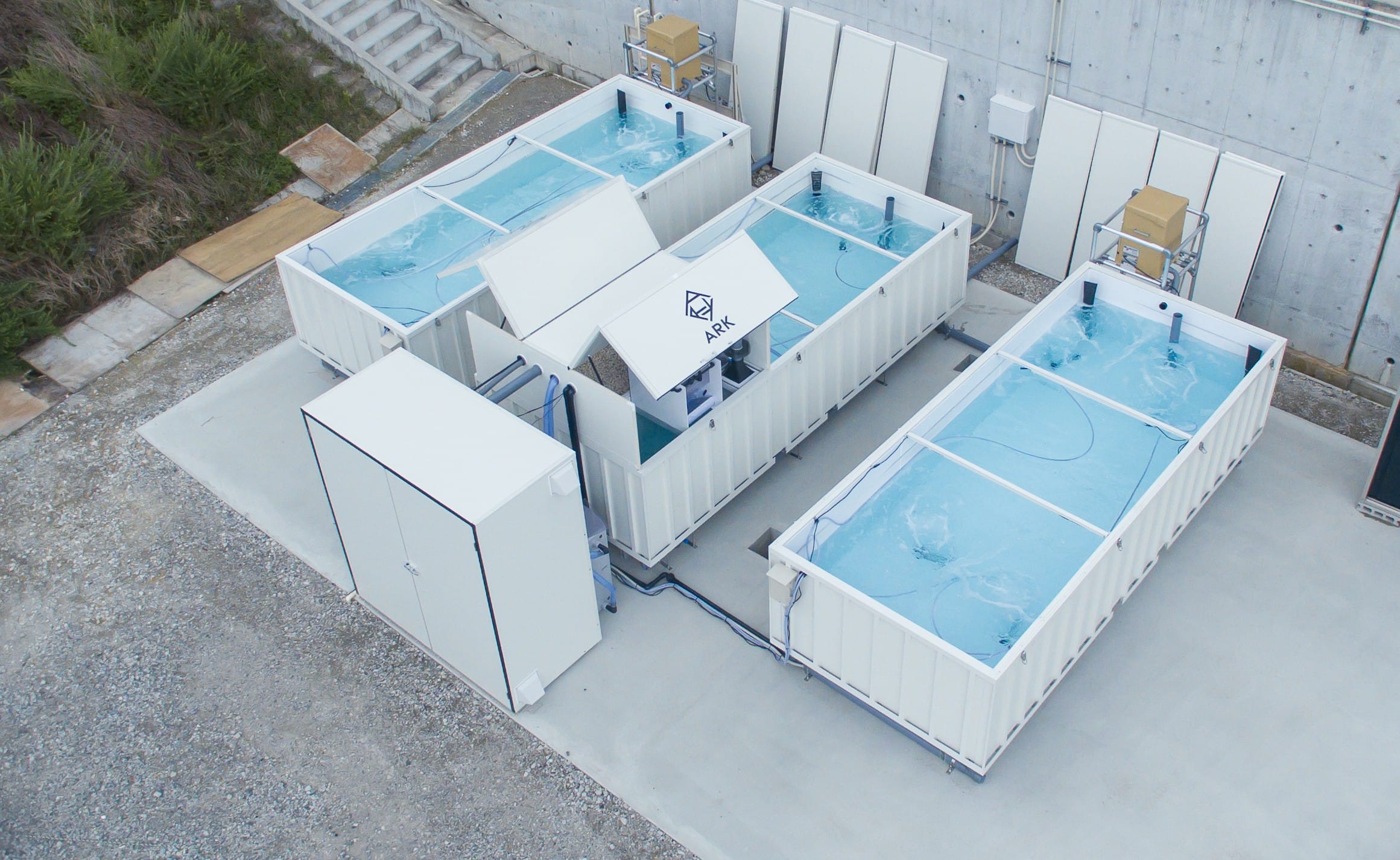
“ARK ZERO MATRIX” is a modular recirculating aquaculture system (RAS) that allows businesses to enter land-based aquaculture quickly at the scale they need, then expand in stages as demand and the business grow.
Thanks to its modular design, operations can begin in as little as six months after installation, supporting flexible aquaculture businesses tailored to local environments and market needs.
ARK SEA: End-to-End Support for Launching Land-Based Aquaculture Businesses
Starting a land-based aquaculture business requires more than just installing equipment. It calls for a wide range of expertise, including business planning, species selection, facility design and construction, aquaculture techniques, and building an operational structure.
Through “ARK SEA,” we provide end-to-end project support for land-based aquaculture businesses, from planning and design through launch and operation, tailored to each client’s goals and business environment.
ARK also operates its own land-based aquaculture business, and we apply the insights gained from actual production and operations to our product development and business support services.
Expanding Japanese Aquaculture Technology to the World
ARK’s goal is not to replace traditional fisheries with land-based aquaculture, but to work as a hybrid with wild-capture fisheries and marine aquaculture to “build the systems and culture that enable anyone, anywhere, to practice land-based aquaculture.”
ARK is currently expanding its business beyond Japan into regions including Southeast Asia and the Middle East. Our participation in this international summit gave us the opportunity to present Japanese land-based aquaculture technology and our business model.
Going forward, through partnerships with companies and research institutions in Japan and around the world, we will continue to promote the real-world implementation of land-based aquaculture tailored to the environment and market needs of each region, contributing to global food security.
Event Overview
- Event: Future Food & Fuel Summit 2026 (FFFS 2026)
- Date: Friday, October 2, 2026
- Location: Singapore
- Organizer: Leave a Nest Singapore
- Supported by: Embassy of Japan in Singapore